Spotlight - SOFT RIOT
GetMusic's artist spotlight features SOFT RIOT, sharing the story behind the music, the latest work, and what comes next.
Introduction & Background
Please introduce yourself and share a bit about your background.
With my current project I usually list my name as JJD, but my real name is Jack Duckworth
which entertains a lot of people in the United Kingdom — a county I’ve been living in for twenty
years as that’s the same name as a famous character from the classic, long-running British
soap series “Coronation Street”.
My original musical roots are from the west coast of Canada and in the underground punk and
hardcore scenes that were happening in North America at the time — a scene based around
record labels like Dischord, Gravity, Art Monk Construction, Kill Rock Stars, Ebullution and that
sort of thing. I had played in a few hardcore bands of no notable mention, then starting a band
called Radio Berlin which was in the first wave post-punk revival back in 1998. That band had
released a few albums, toured the US a lot before disbanding in 2005.
I’ve been doing music for quite a while now but still feel full of energy. Some things that I’m
passionate about, like music, just can’t seem to go away and I’m always looking at trying new
things and pushing the limits with what I can do with it.
Currently I’ve been doing music on my own under the name Soft Riot for about 15 years now. In
the late 90s, key players in the hardcore scene I was in started experimenting with sounds and
styles from the decade previous, namely pulling in elements from synth, darkwave and post-
punk. Since then I’ve gone through various incarnations of the ongoing “post-punk revival” to
where it sits today.
Being active in the DIY scene in Vancouver, Canada for around ten years working with bands
like the aforementioned Radio Berlin, I first moved to London UK in 2007 and after around
seven years there I had a brief tenure in Sheffield and then moved to Glasgow, Scotland around
ten years ago now, which is now my home I suppose!
Soft Riot started in London in midst of an active period of new bands working in darker synth
music at the time and it’s carried on then — with a good number of albums and having played a
good number of places throughout Europe during that time.
What's your musical origin story?
This is a question that’s been easier for me to answer in retrospect all of these many years later.
Until I was around ten years old I grew up in a very remote town in the middle of the rainforest
near the north end of Vancouver Island in Canada. Everything cultural seemed like a different
world back then. I suppose I got into music growing up as a kid in the 80s watching films with
soundtracks by the likes of composers such as John Carpenter, Tangerine Dream and Howard
Shore.
Through my dad, stepdad and some of my other older relatives I was introduced to groups like
Depeche Mode, Joy Division, Gary Numan and Rush (the 80s stuff, which is in my opinion their
best work). After living there we moved to a far larger town further down the island as the 90s
approached and from there I found myself being pulled in enthusiastically to the local
punk/hardcore scene happening there.
I had always had a “do it yourself” attitude with creativity — even as a kid — so the ideals of that
scene upon being introducted to it resonated with me quite intensely. Soon enough I found
myself playing in bands, promoting and putting on shows in the town I was living in at the time.
The first gig I ever played was an outdoor community gig for “Canada Day” in 1993. I was
almost turning 15 years old at the time. Things sort of snowballed from there and that’s all still
rolling steadily all of these many years later.
What were the driving forces or pivotal moments that inspired you to pursue music?
I’ve always had an affinity for music even since I was a young one. I started using crude
computer programs back in the second half of the 80s before I even picked up a guitar in my
early teens when I was getting involved in starting noisy punk/hardcore bands. My mind is
thinking about music often — a lot of times many song ideas formulate themselves for the most
part in my head even before I touch an instrument. So there’s that constant flow of creativity
that’s one drive.
However, another is the sense of community and sharing ideas amongst other people. As I
started meeting people through the scenes I landed into when I was first playing in bands and
travelling around, of course there’s a common feeling of unity when being at shows or listening
to music with the people you know. But that also goes further than that as through music I’ve
met so many amazing people around the world and in turn have a lot of fantastic stories that
have come out of it. Some of these people I’ve become good friends with and still have that
bond with many of them even to this day.
Musical Identity
How would you describe your style of music?
That’s been a tough one for me, especially in these modern times where genre and sub-genre
categorization are the norm in the streaming, self-curated playlist age. For the sake of brevity I
just say I’m “electronic post-punk” as that’s literally what it is — myself coming from punk and
hardcore roots and working with pretty much synthesizer instruments and my own voice.
When Soft Riot was starting out, there was a conscious decision to break away from the more
noisier band projects I had been doing up until then, pulling from more from cinema,
soundtracks, psychedelia and more ambient-influenced sounds. There was also an initial
challenge of the instrumentation as it was the first project that I’d played out live with where I
was operating multiple synths on stage and singing at the same time.
As I figured out what I was, had more confidence working with my set-up and more so that Soft
Riot became my main project, the compositions started getting more energised and pulled from
a lot of music I had been into for a long time. These influences came from genres such as
darkwave, new wave, post punk, Italo, EBM and other things like even prog.
How is your personality reflected in your work?
As Soft Riot is essentially a solo project by default my personality is going to come out more. If I
was working with the same instrumentation but working on music with other people — whether it
be a duo or even a band — it would probably sound a lot different.
So with that I have free reign to utilise strange arrangements that appeal to me and a lot of
dissonance that sounds more organic, perhaps being influenced by noise and feedback from
guitars. I place a lot of repeated music motifs across numerous albums and tracks that have
been done with intent that most people won’t really pick up on. There’s a lot of space and
counterpoint in the instrumentation as that’s sort of how my mind work.
This even comes across with the lyrics, in which there’s a lot of word play and subtle black
humour. I’ve always been a fan of a band like Nomeansno — who I got into very early and with
Soft Riot have even covered on of their songs — who for me are masters at this balance
between the sinister and humourous absurd when it comes to lyrics.
Finally, being a graphic artist I’ve done all of the visuals for my releases and music videos, so
there’s that aspect my personality comes to the fore as well.
I guess I’m a bit like a shark — I’m mega focused on what I want to do and am always looking to
move things forward while still being “me” with each release I put out.
Describe your creative process when you write new music.
As time goes on for me it’s more and more difficult to recall the mindset and the details of my
creative process from albums I’ve done in the past. What is fresh on my mind is that after the
release of the 2023 album No. I was feeling really burnt out from the whole process of mixing,
manufacturing and promoting that album, as long as the work doing music videos and other
things for that. I tried to continue writing after that album’s release but I wasn’t really liking
anything I was coming up with.
I therefore stopped and took a break and during that time I wrote down a lot of notes about what
was working and what wasn’t, as well as ideas of things I should try. There was a certain
mindset I needed to be in and I knew how that should feel. It was only fifteen months later that
the creative lightbulb burst back into light and I just dived into writing it.
As mentioned a lot of ideas come into my head but with the latest album Crux there were some
tracks I wrote based on a series of extensive studio jams. With Soft Riot the writing process is
sort of like painting — adding different colours and tones to the sonic palette. From there it’s
emersing myself in what I’m writing in different environments and states of mind and dialing in
the final details from there.
Even the way I utilised my voice on Crux was less about sounding technically “good” as a
vocalist but more so the character, even if it wasn’t pitch perfect. Some of my favourite singers
are far from being perfect anyway.
Current Work
What is the name of your latest release?
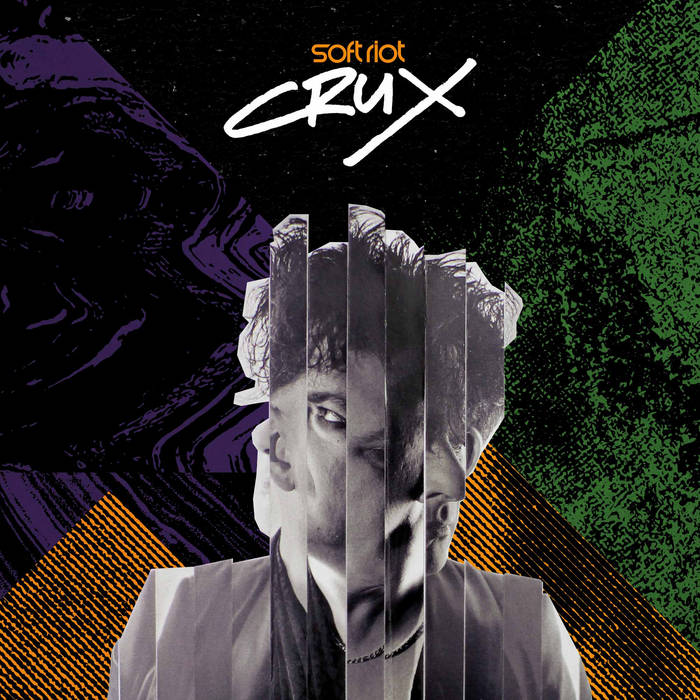
Crux
What was the inspiration for that release?
I suppose that being a decade and half into doing Soft Riot, and the fact that I’m bit self-
depreciating and critical of what I do (as well as other music in general), with Crux I wanted to
pull out all the stops and put out a record I was genuinely ecstatic about.
The previous album No. — which I’ve gotten a lot of good feedback on — sits weird with me as
it was a “lockdown” record. I wrote most of the tracks on that album from 2020-2022. It was a
weird time and the tracks on that record where all written seperately with no particular overall
plan to be an album. It’s got definitely strong points but under strange circumstances.
With the lockdowns easing, my life went through a lot of changes and I went into a new chapter
of my life, so the tracks on Crux reflect the new era of my life I was going into. It was exciting
and I looked at things different. It was super fun record to write and I just went with intuition
when writing it. A lot of tracks on that album I didn’t really have to struggle with, and in some
cases the ideas for them just sort floated into my mind without thinking about it.
Overall I treated Crux as if it was the last album with Soft Riot I was going to make. This of
course isn’t the case but overall I’ve created a solid artifact in my timeline that I’m genuinely
proud of.
Crux is the latest album that came out in May. It is available in digital download, streaming,
digipak CD and what I call a “standard vinyl LP” package on my own imprint, Possession
Records. The LP release on Possession came about as original a German label called
Minimalkombinat released a “limited edition” version of the album on vinyl, which sold out in pre-
orders in three days. This version has some fancy metallic card inserts and a clear plexiglass
relief on the front cover, with all versions on the LP on orange and black splatter vinyl. The vinyl
LP is currently available through a wide array of distributors.
Coming at the end of June is an EP (mini-album?) called Alter, which I guess is sort of a
companion piece to Crux. It contain an exclusive track for the album, as well as alternate and
extended versions of tracks from Crux that I suppose are more geared for dancing or spacing
out — mixed by myself.
What challenges or unexpected moments did you encounter during the writing/recording process?
I think for me the main challenge was the fact that I invested so much physically, emotionally
and mentally into writing the record, that I had big reservations in pushing the “big red button” in
releasing it to the public, and even before that, objectively mixing the record myself. Over the
past ten years I’ve mixed my own releases — which I’m certainly competent in doing — but
wanted to do something different this time.
A good, old friend of mine, Owen Pratt, from London who is a producer and audio engineer —
as well as being the sound mastermind in his very underrated bands Noi Kabát and Uncanny
Valley — has offered his services to mix the record and come down to his studio which is now in
a remote region of southern France. I took him up on it and am grateful for it. He’s got the skills,
ears, equipment and sense of innovation that I felt was a good idea to pair up with Crux. I spent
a week in his house in the remote countryside — an ideal location — and got the mixes
sounding grand with his input.
So that issue was resolved. The only real issue was to scramble to get a second version of the
vinyl LP out as the original “limited edition” ones vanished quickly. The writing of the tracks as
I’ve said came about very intuitively.
Promotion & Engagement
What strategies do you find most effective for promoting your music?
Of course nowadays there’s far more methods of engagement with an audience: being active on
social media, listening parties, behind-the-scenes videos and more personal engagements with
a fanbase. While I utilise some of these, I suppose I’m wary of the erosion of truly DIY,
underground methods of connecting with a fanbase with the increasing use of what are
essentially large, corporate platforms. I also value privacy more these days in an age where that
increasingly takes more effort to do. And frankly, I just don’t have the luxury of time to sit around
creating and endless stream of content for these platforms. I’d rather be writing music and
playing to be honest.
But overall we’re all humans and overall enjoy doing things in real spaces, so for me playing
live, talking to people in person and promoting in non-digital methods (flyers, download codes),
etc. I still find effective. I know a LOT of people that have totally closed themselves off of social
media, for reasons that I can totally relate with at times.
For me I think a strong visual presentation that reflects the ideas behind the music works. If
anyone wants to find out more about how my mind works, they can find the most information on
my website, softriot.com. I built it, I own it and it’s relatively free from the noise of the social
media world. I do a lot of writing there, whether it’s writing about music that I’m into (Track Of
The Day), films that inspire the music (Film Klub) and much more.
How do you engage with your fans online and offline?
Well, I’m always open to communicating to fans when they reach out by direct message or
email. I’m happy to answer questions, share ideas and interact with others in the various
underground scenes many of us are involved in. I’ve been this way for as long as I’ve been
playing music.
Outside of this the opportunity to play shows and tour not only allows me to bring the music to
the masses in the towns and cities I play in, but it also offers new experiences and the chance
to engage with and feel camaraderie with many like-minded people around the world.
What upcoming promotional activities or releases are you most excited about?
At the moment I’m still in the midst of the promotion work with both Crux and Alter, which will still
continue on for the next little while. I’m currently working a further two music videos for the
album and getting it out to any folks that might connect with it.
However, with the release of this album I’ve also realised I’ve put out a mammoth amount of
music in the time I’ve been doing Soft Riot — more so than a lot of artists. I’ve probably spent a
disproportionate amount of time writing and releasing music than actually playing it live —
something I haven’t been doing as much over the past year. So with that, moving onto the
second half of this year and into all of next year I really want to re-direct my available time,
resources and energy into booking and playing shows. You know, getting out there and bringing
the music in the physical world, meeting new people and to have an adventure doing it.
I’ve also been branching out into some other projects to spread my wings a bit. This includes
picking up the guitar again and doing more of a “band” project which has been slowly
developing behind the scenes. That and doing more collaborations with others too to have the
experience of getting out of my “solo” bubble and working creatively with others.
How can folks contact you?
Anyone interested will find a massive amount of information on my website, softriot.com — but
I’m also on these platforms as well through the below links:
instagram.com/softriot/
facebook.com/softriot/
soundcloud.com/softriot/
subvert.fm/soft-riot/
youtube.com/c/softriot/
Any additional insights?
I’ve hinted at this in this interview, but I’m also an active graphic designer, visual artist and video
editor — something I’ve been doing almost for as long as I’ve been doing music and with that
my actual “day job” sees me self employed in those fields. I’ve done a lot of work for non-profits
and ethical companies over the years, but have done dozens and dozens of release designs for
bands over the years and probably hundreds of event and club posters. I’ve done music videos
for bands like She Past Away and Qual as well as stage visuals for a number of independent
festivals throughout Europe. Anyone can check out my portfolio for more music and art oriented
clients at jjdinfo.com.
Featured artist