
Spotlight - I Ya Toyah
I Ya Toyah: Interrupting Certainty
There are artists who make music to help you escape. And then there is I Ya Toyah. "I don't write to escape reality," she says plainly. "I write to expose it." Born and raised in Lodz, Poland, and now based in Chicago, I Ya Toyah occupies a sonic space that resists easy classification — industrial at its bones, electronic by design, and stubbornly, uncomfortably human at its core. Her work is an ongoing confrontation: with culture, with contradiction, with the parts of the self we'd rather quietly delete.
Origin Story: A City That Already Sounded Like Music
Music arrived in I Ya Toyah's life long before she had language for it. Growing up in Lodz, she was surrounded by a remarkable range of sound — classical training sitting alongside punk, jazz, techno, metal, and electronic music. But just as formative was the city itself.
"The industrial noise of the city — construction, factory noise, machines. Those worlds never felt separate to me. They became different languages for the same emotion."
Rather than forcing herself into a single genre, she eventually stopped trying. She began building one that sounded like her. Her time at the Music Institute proved pivotal, giving her the technical vocabulary to translate those internal perceptions into a shareable form — to give the sounds inside her a shape the world could hold.
What kept drawing her forward was a fascination with the unsayable. "I've always been fascinated by the things people are afraid to say out loud," she explains. Over time, she came to understand music as one of the few remaining spaces where honesty isn't measured by likes or consensus — but by how deeply it unsettles us.
Musical Identity: Beauty, Decay, and the Space Between
Ask I Ya Toyah to describe her sound and she offers a portrait built on contrast: "Industrial at heart. Electronic by design. Human at its core. Heavy enough to shake the walls, vulnerable enough to leave a bruise." She leans into opposition — beauty and decay, softness and violence, silence and noise — and deploys those contrasts across both audio and visual dimensions of her work.
That attraction to contradiction is not just aesthetic. It's personal.
"I'm drawn to contradiction because people are contradictory. Strength without compassion becomes cruelty. Sensitivity without resilience becomes survival. My music lives in that tension because I resonate with all these elements. I am full of contrasts and therefore so is my music."
Every song, she says, begins with a question she's trying to answer herself. The sound follows the truth she's chasing — sometimes a distorted synth, sometimes a guitar, sometimes complete silence. Vocally, the range is just as deliberate: from a whisper and soft expression all the way to powerful belting and guttural screams. "Every sound has to earn its place."
Latest Release: Apology
I Ya Toyah's latest track is Apology, and it does not offer one.
The song examines a culture that rewards outrage and allows victimhood to harden into identity. It's written from the perspective of someone convinced the world owes them something — while never pausing to ask what they might owe the world in return. The discomfort is entirely intentional.
"I don't believe art should always reassure us. Sometimes it should ask whether we're becoming the very thing we criticize."
The challenge in creating Apology was not technical — it was psychological. The song only came fully to life when I Ya Toyah stopped worrying about being misunderstood and committed fully to the message in its sharpest form. "I'd rather create conversations than consensus," she says. It's a statement that doubles as a mission.
How She Works: Cinematic Honesty Over Algorithm
When it comes to promotion, I Ya Toyah's approach mirrors her creative philosophy. Trends, she notes, disappear. Honest stories don't. Rather than chasing algorithmic reach, she invests in cinematic visuals that function as extensions of the music itself — not advertisements for it. "If someone remembers how a song made them feel, that's more valuable than any algorithm."
Her relationship with her audience operates on the same principle. Whether she's connecting after a live show, through newsletters, social media, or her Patreon community, the goal is conversation over campaign. She describes the Patreon community in particular as something almost rare:
"It's especially strong, almost magical, on my Patreon, where the community shares real-life experiences and feelings — whether it is under my published posts or via DM."
She genuinely needs those connections, she says. Human energy is not optional for her — it's part of the work.
What's Coming Next
I Ya Toyah is already moving into the next chapter. On the immediate horizon is a reimagining of a popular industrial song — one that turns its lens on obsession in a distinctly modern form: the invisible systems of evaluation, scores, and constant surveillance that have quietly replaced human judgment in everyday life. Beyond that, she is writing new music that continues asking the difficult questions she believes are in short supply right now.
The Best Compliment She Can Receive
If there is a single thread running through everything I Ya Toyah creates, it is this:
"I don't write songs to tell people what to think. I write them to interrupt certainty. The best compliment I can receive isn't that someone agreed with me — it's that they walked away asking themselves a better question."
In a cultural moment saturated with noise and certainty in equal measure, that might be the most radical thing an artist can do. 🩶
Connect with I Ya Toyah
- Website: iyatoyah.com
- Instagram: @IYaToyah
- Bandcamp: Listen to Apology
- Patreon: patreon.com/c/IYaToyah
- Also on: Facebook, TikTok, YouTube, and Spotify — all @IYaToyah
Featured artist
I Ya Toyah
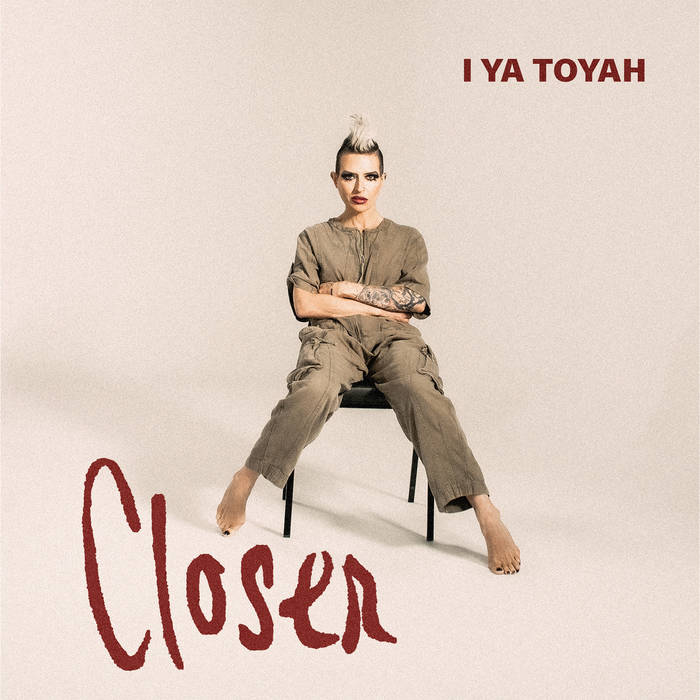
“I Ya Toyah Reveals Cover of Iconic Nine Inch Nails Hit 'Closer'”
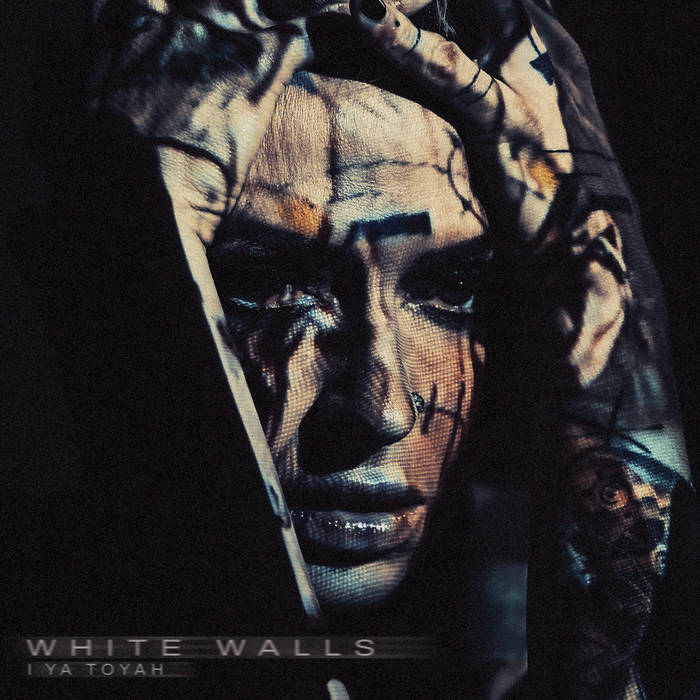
“I Ya Toyah Confronts Inner Darkness for World Mental Health Day with 'WHITE WALLS' Single Release”
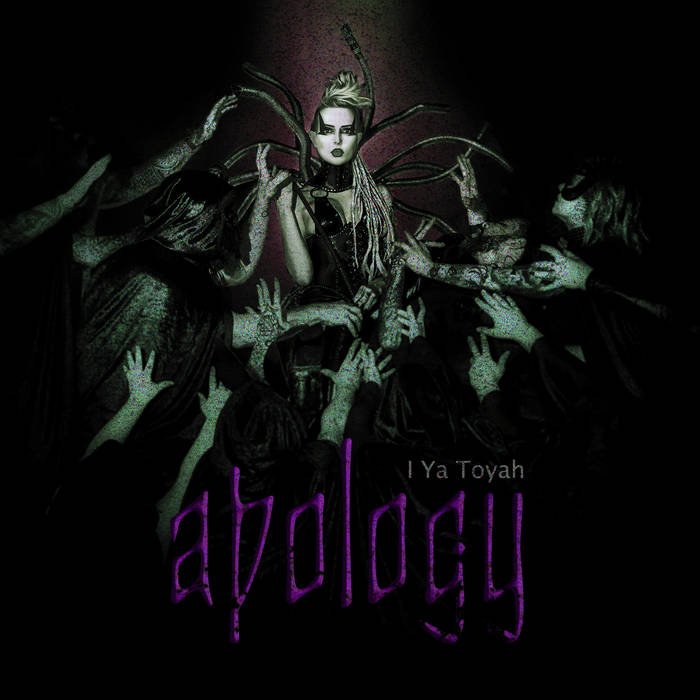
“Industrial-pop powerhouse I Ya Toyah releases new single 'Apology' before heading out on summer EU tour with KMFDM.”
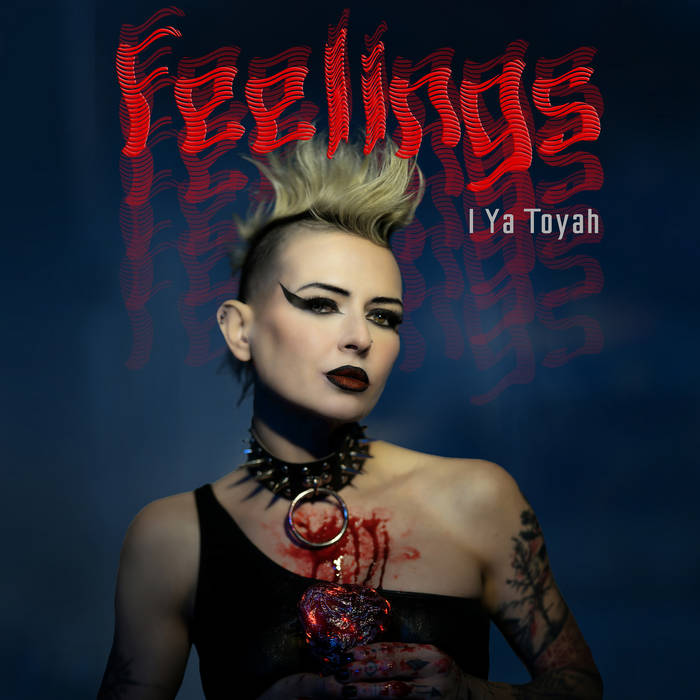
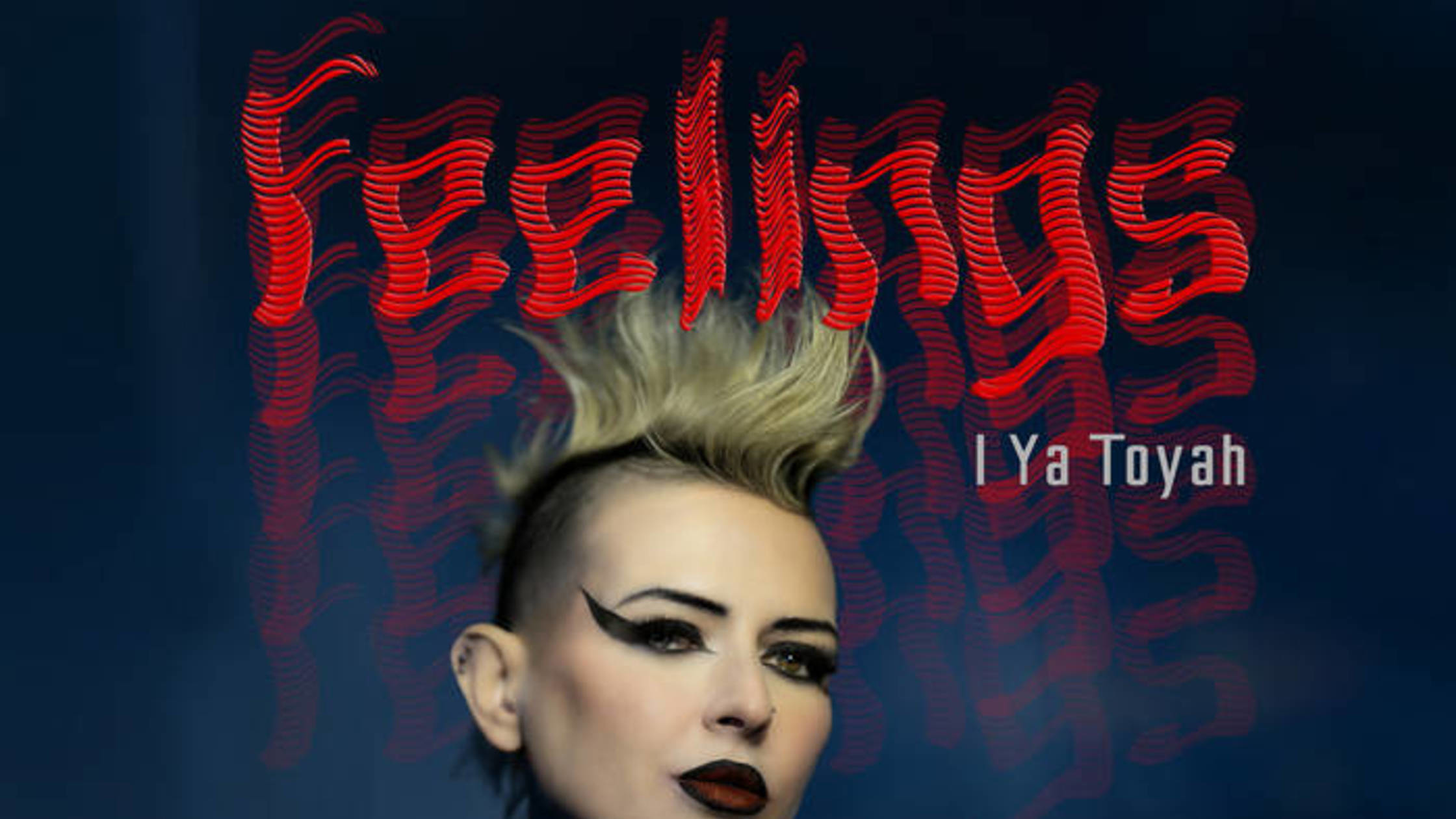
“Industrial powerhouse I Ya Toyah reveals 'FEELINGS,' a hard‑edged industrial statement that turns the mirror on modern humanity — and doesn’t look away.”