
Spotlight - Brandon Hopkins
Brandon Hopkins: Finding Music in the Machinery of Everyday Life
Brandon Hopkins is a British composer born in 1997, raised between Guildford, Portsmouth, and a few formative years in Spain, and now based in London. His music occupies a thoughtful, carefully constructed space where contemporary classical composition meets minimalism and experimental electronic sound — and where the overlooked textures of daily life become the raw material for something genuinely arresting.
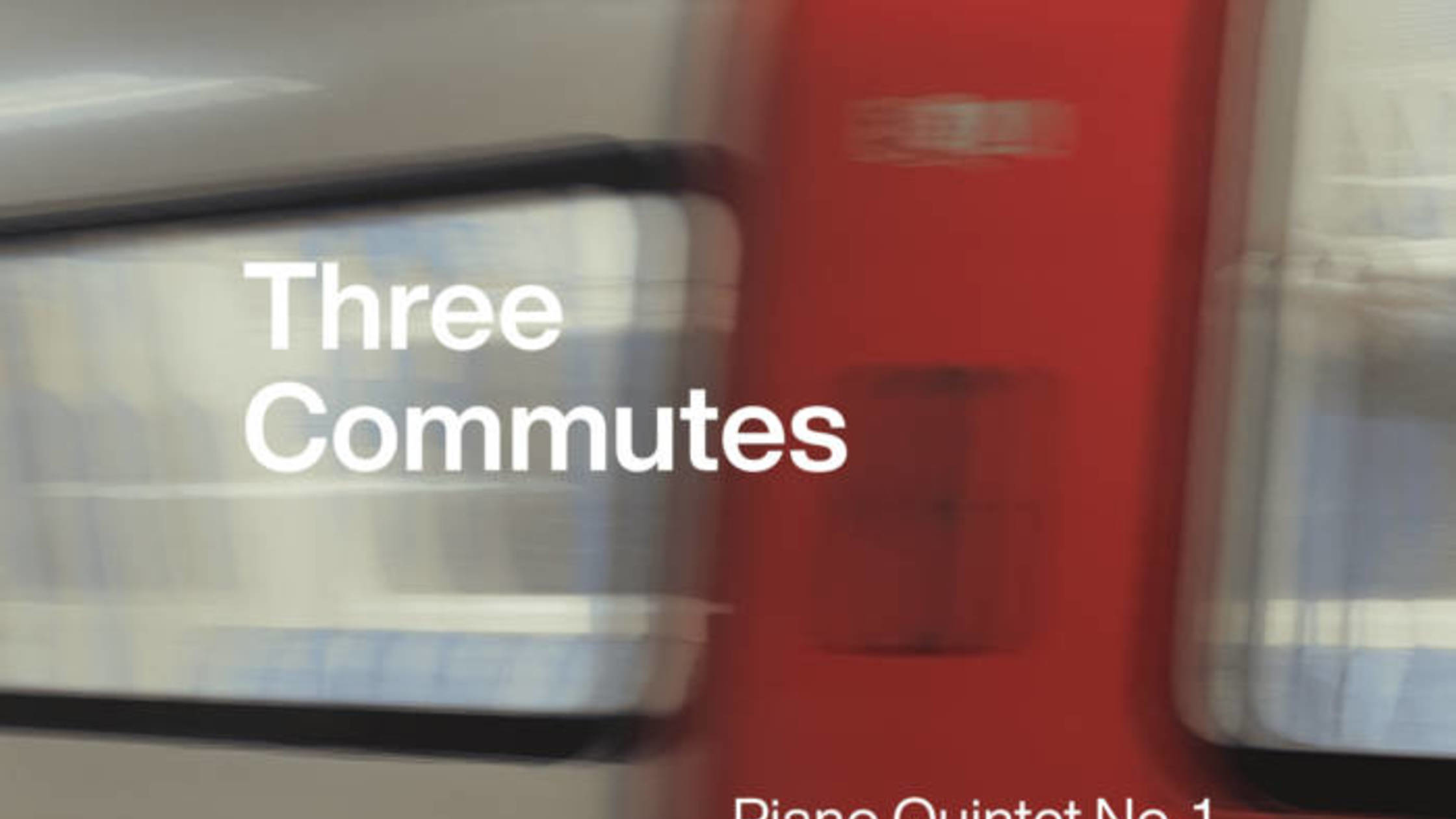
His latest release, Three Commutes, is available now on Bandcamp and all major streaming platforms.
Origin Story: A Piano, Bach, and a Burning Question
Hopkins began teaching himself composition at the age of twelve, shortly after his mum bought a piano. He dove straight into the works of Bach, Mozart, and Beethoven — not just performing them, but using them as a doorway into the broader history of classical music and the lives of the people who made it.
"Learning their music naturally led me to the history of classical music and the lives of the composers behind it. That curiosity quickly evolved into a conviction that I didn't just want to perform music… I wanted to create it."
The shift from admirer to creator was cemented by an unexpected source: a documentary about Philip Glass. Until that point, Hopkins had largely associated classical music with the past. Glass reframed everything.
"Glass showed me that it could be a living, evolving art form. That realisation — that I could contribute something new to a centuries-old tradition — cemented my ambition to become a composer."
From that point on, the practice of composition itself became the driving force: the problem-solving, the experimentation, and the search for new ways of communicating through sound. Encouragement from family, friends, and several teachers allowed music to grow into a central part of his identity.
A Sound at the Intersection
Hopkins describes his music as sitting at the intersection of contemporary classical, minimalism, and experimental electronic music. His influences span a wide and considered range — from Steve Reich, Philip Glass, Arvo Pärt, and John Tavener to the sonic experimentation of John Cage and artists like Aphex Twin.
The goal, as he frames it, is not to preserve the classical tradition unchanged, but to extend it:
"The result is music that's immersive, textural, and emotionally direct, balancing structure with experimentation."
Coming from a design and engineering background, Hopkins brings a methodical, detail-oriented mindset to his work. He doesn't think of music primarily as a vehicle for personal expression, but as a way of reflecting the world — exploring systems, environments, and the ways people interact with them. Structure, precision, and carefully considered form sit alongside melody and harmony as equal priorities.
The Creative Process: World-Building Before Notation
Hopkins's compositional approach is distinctive, and perhaps unexpected for a composer working in the classical tradition. Most pieces begin with a concept rather than a melody — he builds the musical world first, defining its atmosphere, structure, and emotional character before drilling into detail.
Unusually, he rarely starts with notation. Instead, he records real instruments directly in software such as Ableton, allowing him to hear the physical qualities of the sound as he works. The score only comes once the music is complete.
Visual identity is woven into the process from the start, too — he develops a title and designs cover art alongside the composition, so that imagery and music evolve together as a unified whole.
He describes this way of working as "bedroom classical" — akin to bedroom pop, but applied to contemporary classical music:
"It reflects the idea that classical music doesn't have to be made in concert halls or expensive studios; it can be crafted independently, with the same care and ambition, from a much smaller space."
Three Commutes: London's Transport Network as Musical Portrait
Hopkins's latest release, Three Commutes, began with a trip to Japan. He noticed that many tram and railway lines there have their own distinctive departure melodies — sonic signatures that shape the character of a journey as much as the places themselves. That observation sparked a question: what would a musical portrait of London's transport network sound like?
"Not as functional jingles, but as contemporary classical works inspired by the sounds of the tube, buses, and cycle infrastructure."
The project draws directly on John Cage's conviction that everyday sound can become musical when we truly listen. Hopkins wanted listeners to recognise familiar sounds almost subconsciously — and to begin hearing them as music in their own right.
Three Commutes is an invitation to pay closer attention to the overlooked details of London's daily rituals: finding beauty and rhythm in the city's machinery while honestly acknowledging its intensity, noise, and relentless pace.
Making the Record: Field Recordings, a National Trust Piano, and a One-Person Studio
The project was as demanding to make as it is rich in concept. Field recording proved to be the most laborious element — Hopkins spent hours capturing London's transport systems in noisy, often awkward public spaces, then listened back through countless takes to find the moments that could be shaped into musical material. Those recordings were carefully arranged into rhythmic structures before any instruments were added.
The acoustic recording process was equally ambitious, especially for a solo operation. Hopkins recorded the piano himself at Sutton House (National Trust) in London using his own equipment. Violin, viola, and cello were all recorded in his home studio. Composer, performer, recording engineer, and producer — he took on all of those roles simultaneously, a process that would ordinarily involve an entire team of people.
A New Chapter
Three Commutes represents something personally significant for Hopkins: it marks his return to releasing music after a five-year break. Recent performances have included the London Festival of Contemporary Church Music, and his work has been featured in film, video games, and installations.
"Returning to composition has reminded me why I fell in love with it in the first place, and I feel more motivated than ever to keep building momentum."
He's looking ahead to releasing new work over the coming months and years, and to bringing these pieces into live performance as they continue to develop.
Listen & Connect
Explore Three Commutes and more of Brandon Hopkins's music across the following platforms:
Follow Brandon on Instagram (@brandonhopkins_) and visit his website at brandonhopkins.co.uk.
Featured artist
Brandon Hopkins
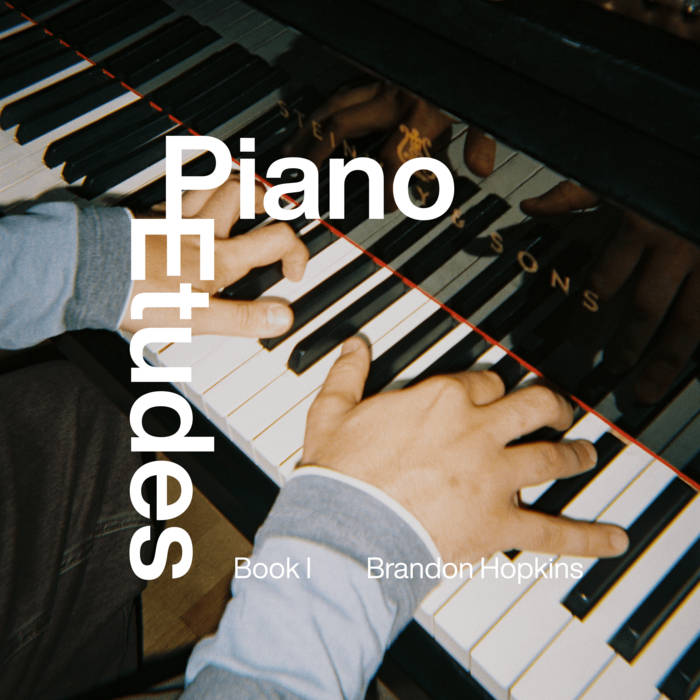
“Written after five years away from the piano, 'Piano Etudes, Book I' arose from the recovery of lost techniques and the discovery of new ones, bringing together an earlier etude composed in Septemb...”
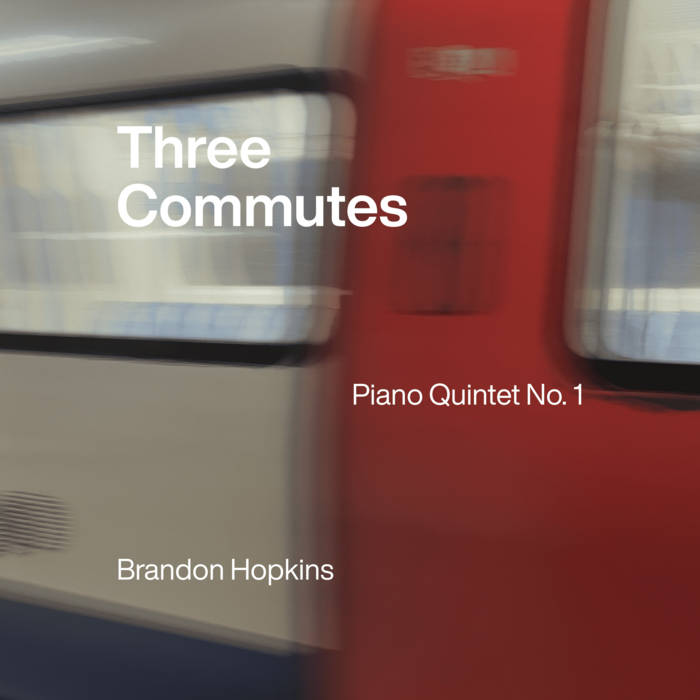
“Created to mark the 26th anniversary of Transport for London (TfL).”